Living Deliberately

“Do not be afraid of death; be afraid of an unlived life.  You don’t have to live forever; you just have to live.” –Natalie Babitt

At least once a day, I am reminded of my own mortality, and it awakens me.  It has been almost three years since I met Ms. M*.  She came to us because she was becoming progressively short of breath.  She was nearly my age, newly married, and had just moved back to the area.  When I arrived that day, the physician alerted me to her presence.  She was very rapidly and mysteriously deteriorating, and would need to be placed on a ventilator very soon.  

When asked if a ventilator is what she would want, she was understandably scared.  I recall her telling the nurse she knew she was dying, but that she could not because she had too many things left to accomplish.  Almost immediately, and right after her husband stepped out of the room, her heart stopped beating.  Despite our best and most valiant resuscitation attempts, she did not survive.  She had an endearing personality, that all of us could see shining through despite her severity of illness.  

In the aftermath of ‘time of death,’ as I sat at my desk taking a mental break, I was once again confronted with the need to live deliberately instead of just passively filling my days.  In this case, the patient’s life so similarly resembled my life, and in my moment of pause, I could feel a ton of bricks set squarely on my shoulders.  It could have been me! The weight of it was profound and heartbreaking.  

It is uncomfortable to think about death in general, especially my own.  However, I have found that allowing myself to linger within the unpleasantness, if only for a moment, can be truly liberating.  For me, considering my last days also helps to reshape the present.

I often ask myself the following set of questions.  A spiritual mentor originally gave these questions to me; I have adapted them along my journey.  

If you were no longer here tomorrow, who would notice?  Further, what would they notice? Would they notice the absence of your kindness? Would they notice the somewhat mundane tasks you performed; daily acts of love now profoundly absent?  Do you have any regrets when you think about the answers to these questions?  If so, what can you do TODAY to change course.

If one is truly living, I believe the above questions can be answered with no misgivings.  To live, simply requires a search within for something more.  Bigger dreams, more passion for the things that occupy our time, the desire to continually learn and do better and the creation of memories with loved ones that will last long after death are required.   I certainly do not want my life to end until I have reached a wonderful old age, but witnessing death serves as a reminder that I am not the one who chooses. While I may not have a vote in how things turn out, everyday I wake up and plant my feet on the floor, I receive the opportunity to live deliberately and take control of the options available.

Moreover, one does not have to witness death to have a wake-up call that serves to increase motivation to take control and create change.  Use my lesson as your alarm.  Do what can be done today, no matter what else is happening, to create a life course that will not be viewed with retrospective regret.  Do it today before the choices run out.

“Tell me, what is it you plan to do with your one wild and precious life?”

The Summer Day by Mary Oliver

*Name changed for patient privacy.

©2019 Inspired Pharmacist
Who Heals The Healers?

“A healer is not someone you go to for healing. A healer is someone who triggers within you the ability to heal yourself. ” -Unknown

“You up for a hug today, honey?” “Always,” I exclaimed. My favorite “lunch lady” was up to her usual tactics of cheering everyone she encountered, or at least trying. Sometimes, I long for her job. She is seemingly unburdened as she listens to everyone’s life story, pausing a moment here and there in the hustle of the day to really connect with coworkers and patient family members. I feel I sometimes do not have this luxury.

As I was preparing to write this week, I came across a staggering statistic from U.S. News and World Report. One-third of physicians report experiencing burnout at any given point. I know my blog is entitled Inspired Pharmacist, but one can imagine that these statistics at least somewhat translate across any profession involving high stress and high stakes. So, I went looking for the data. There it was, I found a similar rate reported among clinical pharmacists, especially those working primarily in critical care areas. I have not looked into contributing factors, but I can imagine burnout results in less empathy toward patients and increased feelings of being overwhelmed.

Consequently, I began to ask myself the question “who heals the healers?” Who are the ones who take the time to care about the ones caring for everyone else? Who are the ones who help restore empathy to health care professionals? Who are the ones who help restore depleted compassion?

The first person I thought of was the “lunch lady!” Many may not realize it, but she is part of the heart of the hospital. Whether she knows it or not, she carries a heavy burden. In fact, she carries a very important load, healing the healers. She, and others like her, are vital members of the patient care team. In a way, she mends the leaking wounds of other staff members and boosts morale as they go about their days. While I know and understand that a lot of healing comes from within, someone like her adds another layer of nearly impenetrable strength to our emotional armor.

We can all play a role in healing each other both emotionally, spiritually and mentally. When situations are viewed honestly and with a willingness to help, doors open and the healing process begins. In the course of healing, the one being healed and the healer both thrive.

While this lesson may be repetitive…be kind. Be the “lunch lady” to those you meet each day.

Reach Out

If you want to end your isolation, you must be honest about what you want at a core level and decide to go after it. – Martha Buck

Mrs. C* was 96 when I met her. She arrived to us from a nursing home after the staff called EMS for altered mental status. As soon as they walked out of the room, she yelled to the nurse, “I’m not really sick, I just had to get out of there, those people are driving me nuts.” Realizing it may be a while before someone from the nursing home could come get her, the nurses sat her in a chair at the nurse’s station near my desk. She said hello to everyone who walked by. To me, she seemed eccentric! She had bright pink hair, fiery red nails, and insisted on wearing a leopard print robe instead of a hospital issued gown. When I complimented her on her attire, she said, “What can I say, I just love beautiful things.” She spoke in such a way that it made me want to continue listening. All of the sudden, I started imagining she had been an actress in her life before the nursing home stay. Her theatrical skills, more than any illness had brought her to the hospital.

She told me about her children, how they lived far away, and about how the workers in the nursing home meant well, but often left her alone for hours at a time. She told me she felt so isolated from the world, and that this, her trip to the hospital, was the highlight of her month. It was interesting to me that surrounded by others, she could still feel isolated. She felt isolated because the deep relationships and companionship she so desperately desired were not present.

At some point after my interaction with Mrs. C, I read that isolation is more detrimental than some chronic diseases and increases the risk of mortality more than smoking. It is not just the elderly who are affected. It is also the poor, the bullied, the grieving, the people on the margins of society, and the rejected. Many people who are lonely and isolated, are too intimidated to speak up and form relationships even though that is what they ultimately desire. The most remarkable statistic…a heartbreaking statistic…25% of Americans have no meaningful social support. TWENTY-FIVE PERCENT without one single person they can confide in, the statistics are staggering.

I am sure there are a million and one things that contribute to this statistic – smart phones, long commutes, work hours, and distractions to name a few. Basically, life in the twenty-first century. After reading those statistics, it has become increasingly more important to me to help break the pattern. Why? Because personal relationships and a connectedness with others impacts human resilience. Personal relationships require communication, encouragement, reassurance and trust. Our personal relationships provide the security of knowing that others will be there when we need them, and likewise we will be there when they need us.

Many would have been irritated with Mrs. C’s constant interruption in their work schedule and the waste of resources she occupied during transport to and from the hospital. However, what I realized after my interaction with her was that her isolation WAS an emergency. So, I’ll leave you with this piece of advice. Work to fill up someone’s emotional cup this week. If you are feeling lonely or isolated, open yourself up to the love of the people in your life. Check on or get to know your neighbors. It may not be easy, neither will it be perfect, but perhaps in time the abyss will begin to fill. Be a healer…the cure could be as simple as conversation. Sometimes, medicine is not about medicine at all!

*Name and some patient information changed to protect the privacy of others

©2019 Inspired Pharmacist

https://doi.org/10.1177%2F000312240607100301

Hail Mary

You can’t outwit fate by trying to stand on the sidelines and place little side bets about the outcome.  Either you wade in and risk everything to play the game, or you don’t play at all.  And if you don’t play, you can’t win. -Judith McNaught

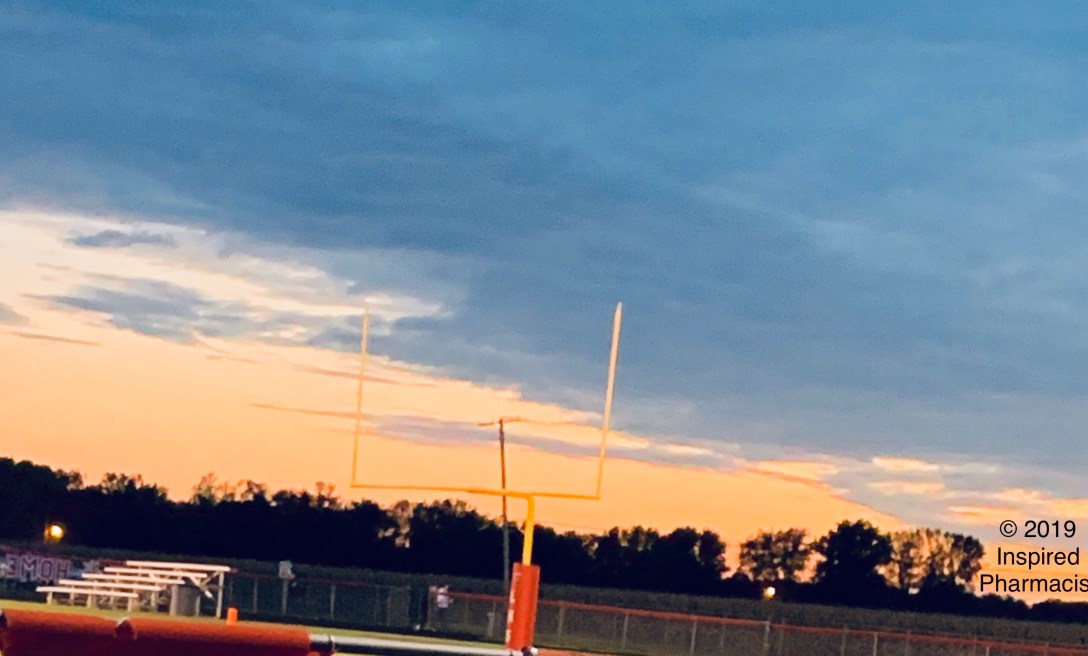
Football season is in full swing around the Midwest.  I have spent many weekends recently on the sidelines watching the team my husband volunteers to coach.  Because I did not grow up watching football, and my high school did not have its own team, this has all been a learning experience.  I am slowly growing to appreciate the game. Notably, I am now critically evaluating how I believe the game could be better played and what penalties I would like to see enforced.  (I am frequently annoyed by the time outs at the end of the game! Illegal time out, anyone?) The play I now love to see incorporated in a game is better known as the “Hail Mary.”  Football is not really my thing, so I never gathered the true meaning of the term until a physician used it to describe the treatment plan for Mrs. C.*

 I had just received a call about her minutes before – “need you in the ER for a code.” When I walked into the room, the physician said, “she’s only 45, so I’m not going to call it, yet. What else can we do?”  I quickly went through my arsenal of ideas, slowly eliminating each one from my mental checklist of options, except for one.  “We could try this treatment,” I said.  “I’m thinking it will have a low probability of a good outcome, but based on what you are telling me, it makes sense to use it in this case.” The physician said, “it sounds like a Hail Mary, but we have to try.”  

 The physician was correct.  It was a Hail Mary play in the truest sense. A desperate measure to resolve a serious problem at the very last minute.  It was unlikely to be successful.  Truly, divine intervention would be needed for the treatment to succeed.  Therefore, I prepared the drug and hoped that against all odds it would work.  We had no other choice.  The treatment did not seem so risky when all other options were exhausted.

 When the nurse gave the medication, I prayed.  With every pulse check and every blip on the cardiac monitor, I prayed harder.  I kept my hand diligently on the femoral artery, anticipating that at any moment I would feel something other than my own pounding heartbeat. I prayed harder.

 As we left the room that day, the physician said, “Well, we did everything we could.”  He was right; we did it all, and then some.  It is at that exact moment when I realized that many times in our lives we are all faced with a decision of whether or not to take a risk. Not all of these risks are matters of life and death. Sometimes it is taking a new job, moving positions within the same organization, starting a new business, or just doing something outside your comfort zone.   Greatness requires risk.  Whether or not you are successful, the risk will stretch you and give you confidence in yourself and the faith to try again the next time.  

 I now understand why the “Hail Mary” pass is so important.  Whether or not the risk was worth it in the end does not matter.  What matters is leaving it all on the field.  You cannot expect to win if you give up.  Never leave the room thinking you could have given more.  


How will you identify the daily “Hail Mary” opportunities in your life?


 © 2019 Inspired Pharmacist

*Name and some details changed to protect the privacy of others.


Piecing Shattered Dreams Into A Beautiful Story

“If your heart is broken, make art with the pieces.” – Shane Koyczan

The low-pitched, gut-wrenching, tortured wail of grief sounds the same in every language. A sound that gives you chills to your core.  The sound of unbridled pain.  Sometimes, after especially brutal shifts, I can still hear those horrifying screams ringing in my ears.

The first time I heard it, I was a student; the patient was eight.  He had been admitted the entire time I was on my pediatric rotation with complications from leukemia, but was slowly improving. In fact, the medical team was talking about transferring him out of the ICU.  He unexpectedly coded one day while we were rounding; his mom was in the shower.  She heard the alarms and came running, arriving to the room barely dressed and soaking wet.  Because I was a student, I smashed myself against the wall to observe.  He did not make it.

As they called time of death, and the alarms that initially alerted us to his deteriorated condition were silenced, I remember looking around the room trying to find something familiar, because everything in that moment seemed so foreign.  It was not right; he was too young to die.  Hanging around the room were hundreds of letters and cards from his classmates, wishing he would be well again.  All of them telling the story of his vibrant life, a stark contrast to what I now saw.  His mother was crumpled laying on the floor in a heap near my feet, understandably weeping.  The faces of the seasoned medical professionals appeared so emotionless, mechanical, and cold.  I wondered how they could be so unfeeling.  I wanted to lay on the floor with his mother, but I pulled myself together, fearing I would appear weak.  I did not cry until I got into my car that night.  In my grief over his life cut short, I made a vow to myself that I would never be so detached.

Walking in the room that day, I thought I would learn about the role of a pharmacist in a pediatric code, and I did, but it also deeply and completely changed me.  The idea that I could grow through this experience still seems objectionable.  However, death and loss teach us something about ourselves and challenge our assumptions.  We have no choice about death.  We have no choice but to grieve.  What we can choose is how we will respond…will we grow better, or will we grow bitter?

It was in that moment that I chose to grow better.  I reassessed my life and how I functioned within it.  My priorities changed. Now, every day, I make a choice to be optimistic and kind to those I encounter.  I am determined to truly listen to those around me.  I dive deep into my spirituality, because what good is all this without the love of God beside me.  I have realized that I am stronger than I ever thought or knew I was.  Most of all, I am grateful for my life.  His death taught me about living; it also changed a job into my vocation.  I wish I could tell his mom how much he touched my life and changed my attitude.

When I made the promise that I would never grow jaded, I also vowed that if there ever came a day when I, too, was emotionless, mechanical, and cold, I would hang it up. Yet, how do I remain optimistic despite the heartbreaking things I regularly see?  The truth: there is no simple answer.  Thus, Inspired Pharmacist was created to document this journey, my journey.  A journey of gratitude, hope, love, and resilience – the good drugs of life.

*Names and some details changed to protect the privacy of others
Copr 2019 Inspired Pharmacist